
Fully automated welding processes are cool and plain fun to watch. Seemingly unattended robots performing their pre-programmed dance can be mesmerizing, but many processes are not suited to being fully automated. Robots can be great for high-volume, low variability production, but when the product mix is lower-volume with high product variability, robots are rarely the answer. In these instances, simple mechanized welding processes have revolutionized the welding industry and have provided numerous benefits over traditional welding methods.

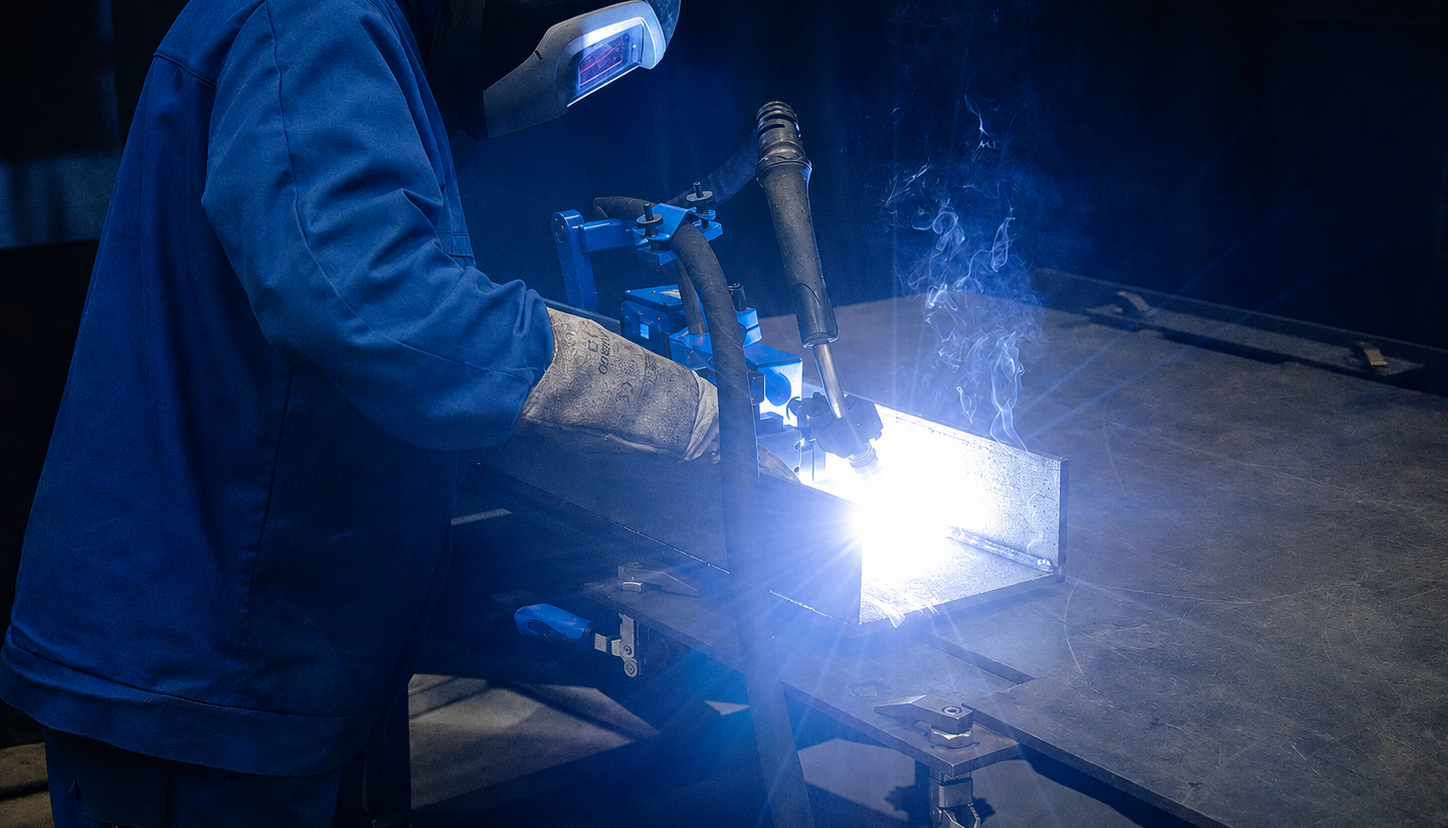
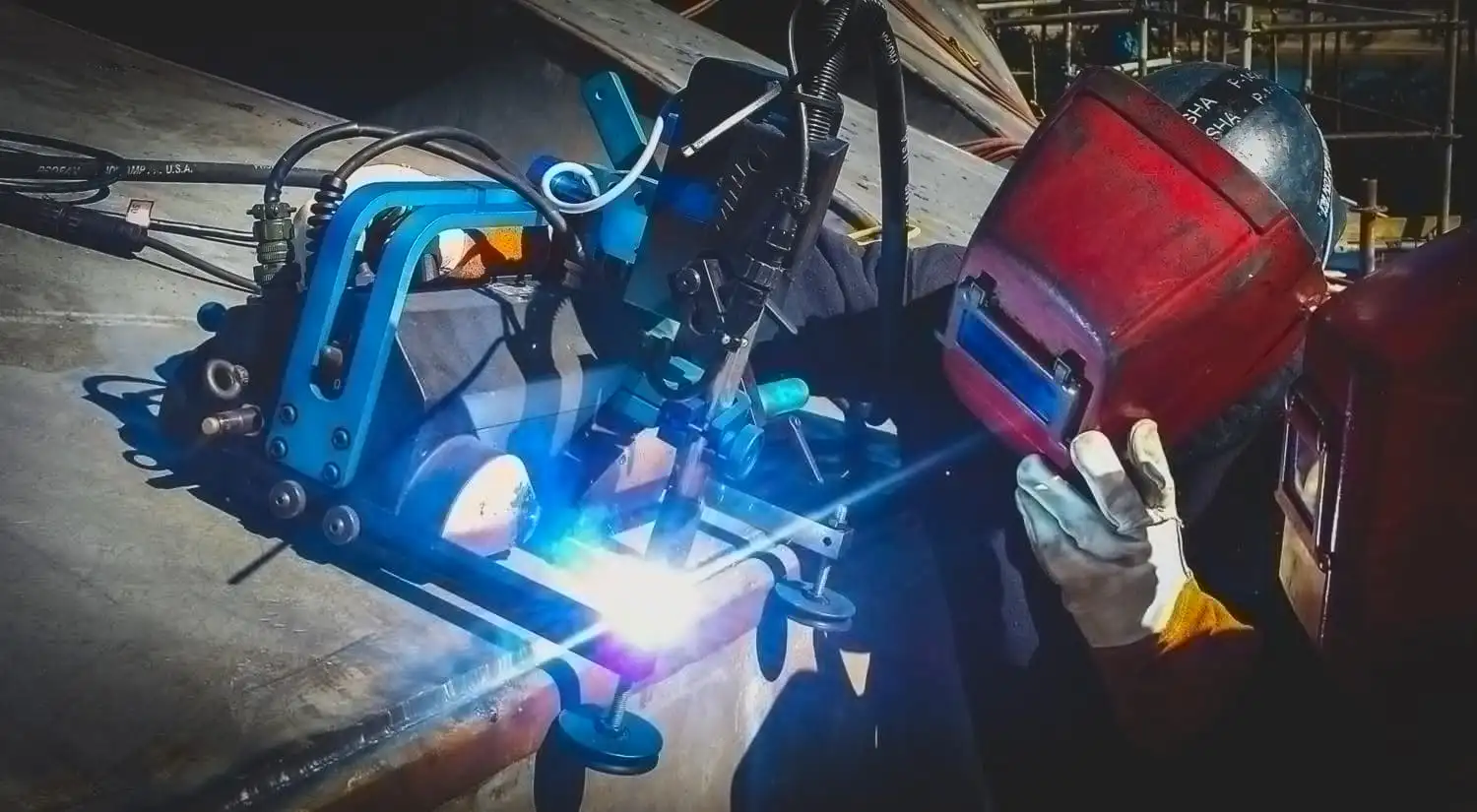
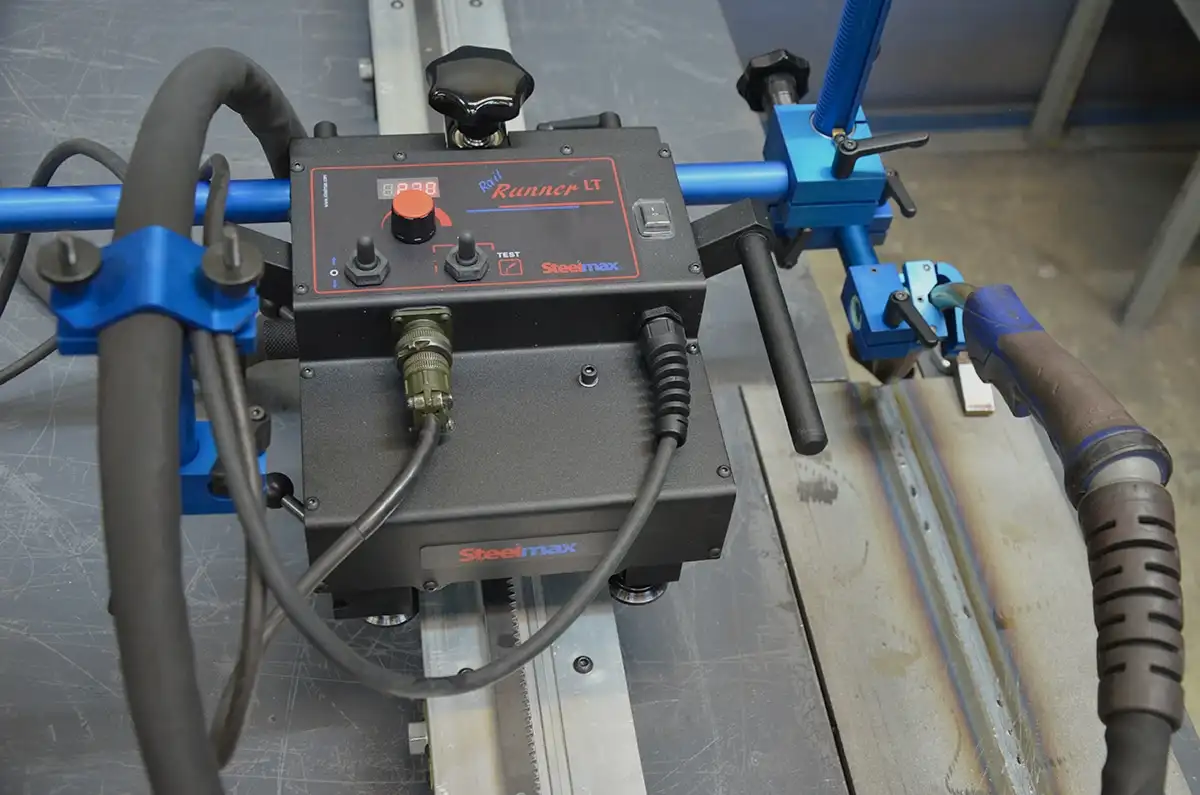
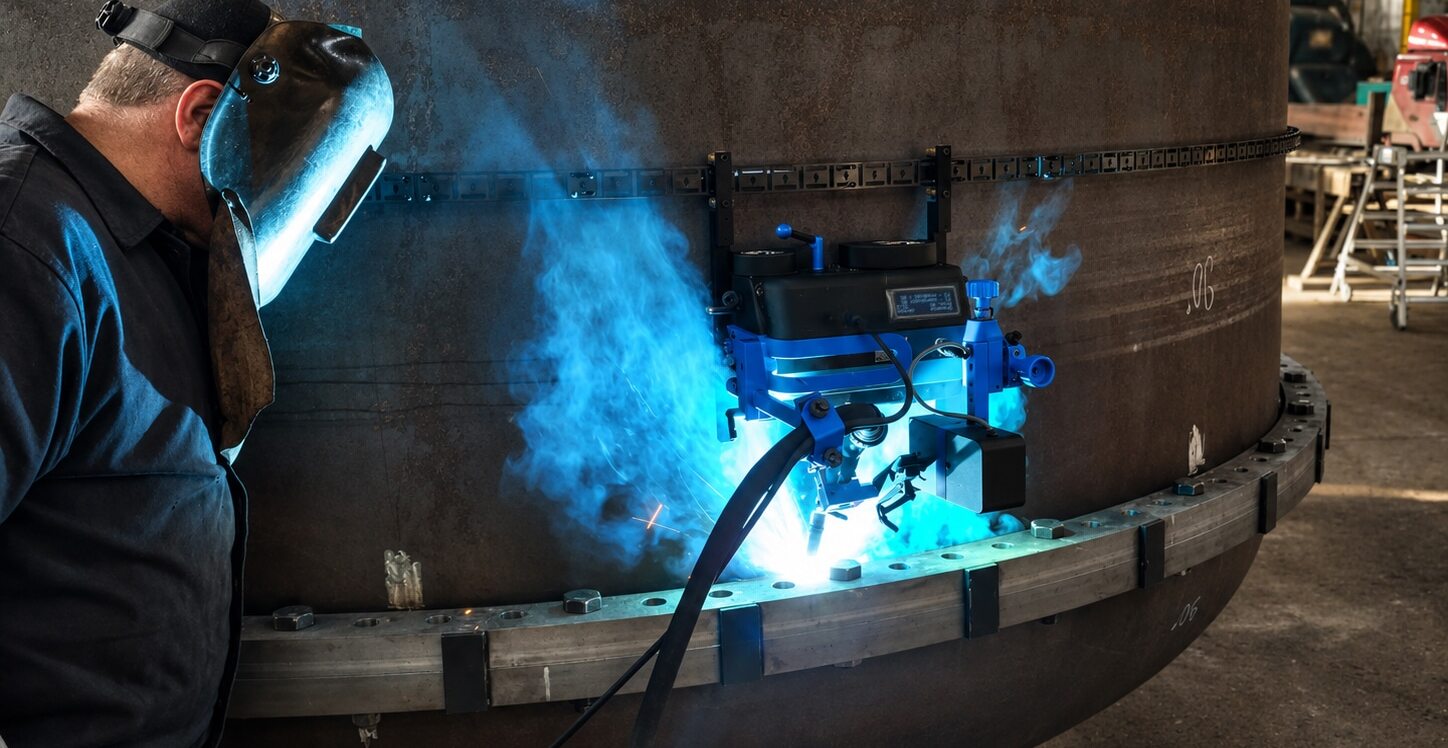
Welding mechanization, generally, involves the use of a welding carriage or tractor to hold a welding torch in a constant position relative to the weld seam and provide precise motion control of the torch along the weld seam. Carriages are generally of two types: (i) those that use magnetic adhesion and guide arms to track the weld seam or (ii) rail mounted machines that travel along a geared track which is mounted to the workpiece (using magnets or vacuum systems) to provide directional control and speed regulation. Welding carriage systems can be set up quickly without complicated programming or precise geometries. This is why they excel in situations where the product mix is low volume or changes frequently.
Here are some of the key advantages of using mechanized welding processes:
- Improved Weld Quality and Consistency: Mechanized welding processes are very precise and consistent, leading to higher quality welds with fewer defects. This results in a stronger, more durable final product and reduces the need for costly post-weld inspection and repair.
- Increased Productivity: Mechanized welding processes can produce a large number of high-quality welds in less time compared to traditional welding methods. This increased productivity helps companies meet deadlines and reduces production costs.
- Better Safety: Mechanized welding processes allow the operator to control the welding process at

a distance from the welding arc, reducing the risk of injury to the welder. Also, since the welding system is moved to the part rather than the other way around, material handling time and expense are reduced while also improving shop safety. - Flexibility: Mechanized welding processes are easily set up and can be reconfigured quickly for application to a variety of weld and part geometries. The systems are also generally lightweight and compact and can be easily moved to the part to be welded, in the shop or in the field.
- Reduced Waste: Mechanized welding processes minimize the amount of waste generated during the welding process, in both shielding gas and filler metal. This reduces production costs and promotes sustainability.
Mechanized welding processes provide numerous benefits over traditional welding methods, including improved weld quality, increased productivity, better safety, increased efficiency, improved consistency, and reduced waste. These advantages make mechanized welding processes an attractive option for companies looking to improve their welding operations.
What Is Mechanized Welding?
Mechanized welding involves the use of a welding carriage, tractor or automatic system to control torch position and travel speed along a weld seam providing consistent repeatable welds in long runs or high production volumes that manual welding is just unable to match. It fills the space between fully manual welding and welding automation, making it a good fit for a lot of fabrication environments.
How a Mechanized Welding Process Works
At its core, a mechanized welding process uses a welding carriage or tractor to hold the welding torch at a fixed position while providing precise, controlled motion along the joint. The operator sets the travel speed, torch angle, and welding parameters at the welding station, then initiates the weld.
Rail-mounted systems travel along a geared track fixed to the workpiece, providing precise directional control on longer straight seams. Trackless magnetic carriages follow the weld seam using guide arms and magnetic adhesion, offering fast setup and flexibility across varied part geometries.
Types of Mechanized Welding Processes
Steelmax also provides mechanized welding solutions for the most common carriage-based welding and cutting applications. Rail-mounted welding carriages move on a geared track attached to the workpiece by means of magnets or vacuum systems offering excellent straight-line control for long seam welding on plate and structural steel and in pressure vessels. Trackless carriages employ magnets for adhesion and guide arms to track the weld seam, so no tracks need to be set up in advance, and they are useful for curved surfaces as well as applications that require rapid repositioning.
Depending on the application, welding and cutting carriages can be adapted for MIG, TIG, SAW, and thermal cutting processes. A welding oscillator takes capability even farther, allowing weave patterns and wider bead profiles for groove filling and overlay welding.
Best Practices for Implementing Mechanized Welding
Maximizing a mechanized welding process begins with the initial setup and operator training. Before you attach the carriage system, make sure your welding station is clean and stable and prepared. Depending on your welding process specification, establish travel speed and torch settings before running a job. Visually check rail tracks, guide arms, and drive systems for signs of wear.
FAQs
What are the advantages of mechanized welding?
Mechanized welding delivers improved weld quality, greater consistency, increased productivity, and reduced operator fatigue compared to manual welding. This also minimizes filler metal and shielding gas waste across production runs.
Can mechanized welding be used for all metals?
Yes, mechanized welding is compatible with most weldable metals including mild steel, stainless steel, aluminum, and more, provided the correct welding process, parameters, and consumables are selected for the base material.
What industries use mechanized welding?
Mechanized welding is widely used in shipbuilding, structural steel fabrication, pressure vessel manufacturing, pipeline construction, heavy equipment manufacturing, and offshore oil and gas.
Is mechanized welding more cost-effective than manual welding?
In most production environments, yes. Mechanized welding reduces labor costs per weld, minimizes rework from inconsistent manual technique, lowers consumable waste, and increases throughput.
Can mechanized welding improve safety?
Absolutely. Mechanized welding allows operators to control the process from a safe distance from the welding arc, significantly reducing exposure to arc flash, heat, and welding fumes.