

Pick the wrong welding machine and you’ll feel it immediately. Weld quality drops, operators grind through more effort than the job should require, and output either fails inspection or gets torn back and redone.
Getting it right means matching the right one from the available types of welding machine to the material, the conditions, and what the job actually demands. This guide covers the core welding machine types, where each earns its place, and what to work through before landing on a decision.
What Is a Welding Machine?
A welding machine delivers controlled electrical current to generate the heat that fuses metal. That’s the function across every process. What changes is how the current gets delivered, what consumables the process burns through, and what material and position the machine is designed to handle well.
Power Source Role
The power source manages amperage, voltage, and arc stability. Different metals, joint geometries, and weld positions call for different arc characteristics. A machine tuned for thin sheets operates nothing like one built for heavy structural plates. That match between power source and application is where every sound selection starts.
Process and Machine
When people talk about welding machine types, they typically mean both the power source and the process it runs. A MIG welder is a wire-feed unit running GMAW. A TIG welder runs GTAW with a non-consumable tungsten electrode.
The two are linked. You can’t run a submerged arc on a lightweight MIG unit. Knowing that connection cuts through most of the confusion that surrounds machine selection.
Main Types of Welding Machines and Their Uses
These five processes cover the bulk of welding work across fabrication shops, repair facilities, construction sites, and manufacturing floors.
| Machine Type | Best For | Key Limitation |
| MIG (GMAW) | Production fabrication, general shop work | Poor performance outdoors in wind |
| TIG (GTAW) | Precision welds, thin material, clean appearance | Slower; higher operator skill required |
| Stick (SMAW) | Field work, dirty or rusty material | Slower deposition, more spatter |
| Flux-Cored (FCAW) | Thick plate, outdoor structural work | More smoke, slag removal required |
| Multi-Process | Versatility across small shops or field kits | Higher upfront cost |
MIG Welders
MIG feeds continuous wire through the gun while shielding gas protects the weld pool. Arc starts are reliable, travel speed is fast, and the process is far more forgiving to learn than TIG. Steel, stainless, and aluminum all run on MIG with the right wire and gas.
Wind is the weak point. It breaks down the shielding gas envelope and introduces porosity. Indoors and in controlled shop conditions, MIG is the default starting point for most fabricators.
TIG Welders
TIG uses a non-consumable tungsten electrode and a separately fed filler rod. The operator commands heat input and bead placement with a level of precision no other process gets close to. That earns it the standard role on thin material, precision joints, stainless pipe, and work where appearance carries real weight.
The cost is speed. TIG is slower, demands considerably more skill, and doesn’t belong in high-deposition production environments.
Stick Welders
Stick uses a consumable coated electrode that handles both filler metal and shielding without external gas. That makes it genuinely portable, effective outdoors, and capable of rusty or contaminated base metal that would cause problems for gas-shielded processes.
Spatter runs higher and slag needs to come off after each pass, but for maintenance, repair, and field work on carbon steel, nothing beats its simplicity.
Flux-Cored Welders
Flux-cored uses a tubular wire with internal flux rather than solid wire dependent on external gas. Self-shielded flux-cored needs no gas at all, which keeps it running outdoors in conditions that shut MIG down entirely.
Gas-shielded flux-cored pushes deposition rates higher than solid MIG wire on thick plates. Where outdoor conditions and heavy deposition both matter, flux-cored is the process that bridges what MIG and stick each can’t cover alone.
Multi-Process Welders
Multi-process units run MIG, TIG, and stick from one machine. Smaller shops needing flexibility across different job types without buying separate equipment get real value from them.
The honest limitation is that any dedicated machine will outperform a multi-process unit at its own process. For shops running one process all day, purpose-built is the smarter long-term spend.
Specialized Welding Machine Types for Industrial Fabrication
Beyond general shop work, industrial fabrication uses specialized equipment for high-volume, high-deposition, or high-precision output that standard machines simply can’t sustain.
Submerged Arc and Plasma Arc Systems
Submerged arc buries the arc under granular flux, delivering high deposition rates, deep penetration, and near-zero spatter on thick plate. Long, continuous flat or horizontal welds on structural plates and pressure vessels are where it dominates.
Plasma arc runs a constricted, higher-energy arc than TIG, handling thinner materials at faster travel speeds with tight heat control. In cutting, plasma arc is one of the most common methods for profile and plate work across fabrication shops.
Engine-Driven Welders and Automation Equipment
Engine-driven machines run on gas or diesel with no grid power needed. Pipeline construction, structural erection, and remote sites without electrical infrastructure are the natural fit. Most run stick and flux-cored, with newer units adding MIG.
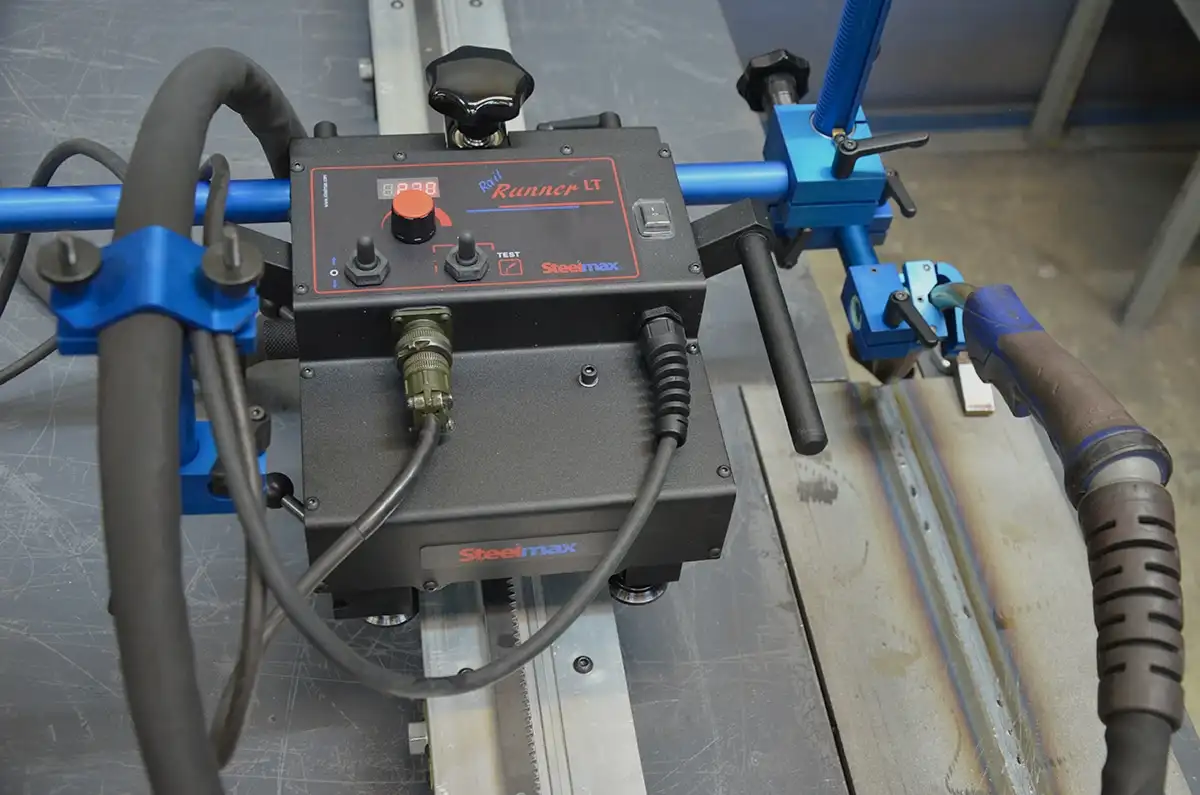
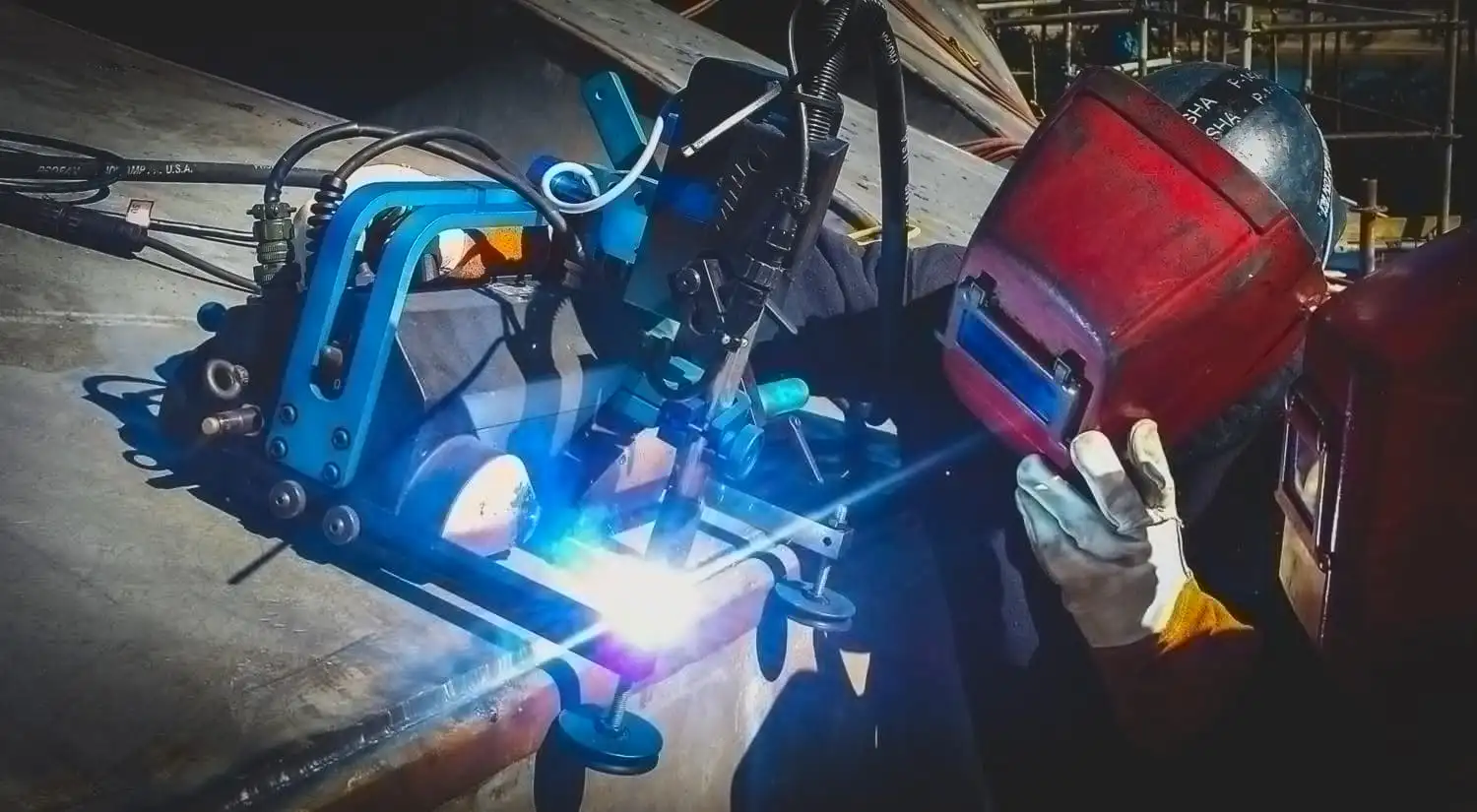
Welding carriages, oscillators, and automated weld tractors fall under welding automation. They guide the torch along a joint at a controlled travel speed, holding parameters a manual welder would struggle to sustain across long seams or extended runs.
A tractor welding machine runs programmed passes on flat, horizontal, or inclined surfaces. Arc-on time goes up, fatigue comes down, and bead geometry holds consistent from start to finish.

Machine selection is an application call, not a price comparison. These are the variables that drive the right answer.
Base Material and Thickness
Steel, stainless, aluminum, and cast iron each need different processes, consumables, and shielding. Starting with the base material cuts half the field immediately. Thickness handles the rest. Thin sheet calls for TIG or short-circuit MIG. Thick plate calls for flux-cored or submerged arcs.
An underpowered machine on thick material produces cold laps and incomplete fusion. A high-amperage machine on thin material burns straight through.
Weld Position and Jobsite Conditions
Flat and horizontal positions accept nearly any process. Vertical and overhead restrict options toward fast-freezing slag systems. Outdoor environments knock gas-shielded MIG out of the running unless wind protection exists, pushing selections toward stick or self-shielded flux-cored regardless of what a controlled shop environment would prefer.
Duty Cycle
Duty cycle is the percentage of a ten-minute window a machine runs at rated amperage without overheating.
A 60% rating at 300 amps means six minutes of welding per ten-minute period at that output. Production environments need machines whose duty cycles match the actual arc-on-demand of the work. A light-duty machine in a heavy production setting shows up as downtime fast.
Manual Welding vs. Welding Automation
Manual welding holds its ground on short runs, irregular joints, and geometry requiring constant hands-on adjustment. But on long, repetitive seams, structural fillets, pipe seams, deck plate runs, variation creeps in as fatigue accumulates across a shift. The first pass and the twentieth rarely look identical, and inspectors notice.
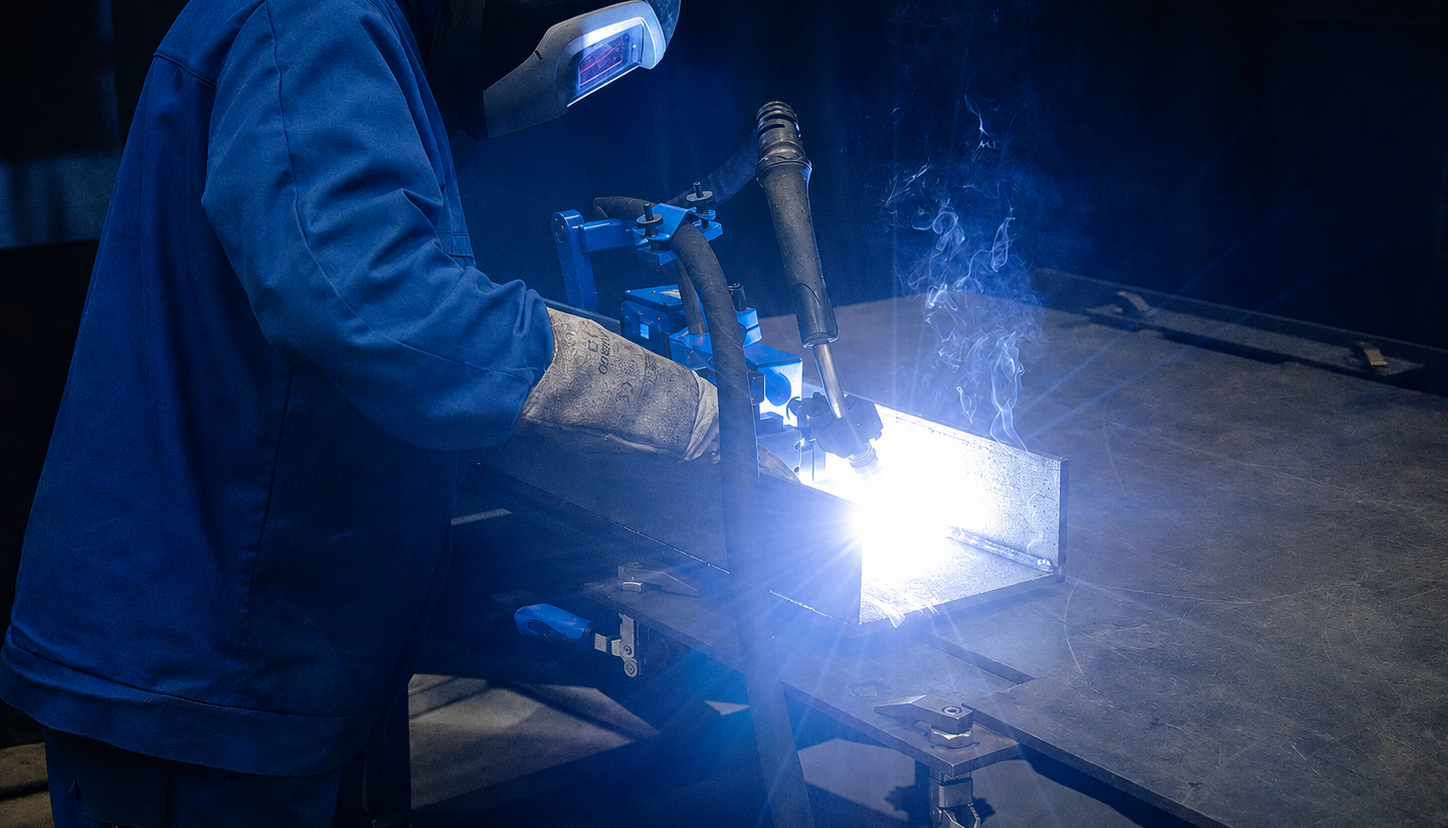
A properly set up welding station with automated carriages or positioning equipment removes that problem. Travel speed stays consistent. Parameters hold within spec. The operator runs the process instead of manually executing every inch of weld.
For shops with high-volume, repeatable joint configurations, automation protects output quality where manual work physically can’t.
Maintenance and Safety Basics for Welding Machines
Check cable and ground connections regularly. Loose grounds cause arc instability and wear internal components faster than almost any other failure mode. Replace consumables including contact tips, liners, nozzles, and electrodes on schedule rather than after they visibly fail. Inspect gas lines and regulators for leaks.
PPE is non-negotiable: an auto-darkening helmet, welding gloves, flame-resistant clothing. Ventilation is equally critical.
Welding fumes carry documented health risks, and OSHA 1910.252 sets ventilation requirements for welding and cutting operations. Manufacturer documentation alongside current AWS and OSHA standards is the authoritative reference for both maintenance intervals and safe practices.
The right welding machine fits the material, the position, the environment, and the production demand in front of you, not the one that costs the least on day one. Knowing what each process does well and where it breaks down is how shops make selections they don’t spend the following year trying to correct. Match the machine to the work. Results follow from there.
FAQ: Types of Welding Machines
Let’s address some common questions around different types of welding machines.
Which welding machine is best for beginners?
MIG is the most accessible entry point. Arc starts are consistent, wire feed is automatic, and the process forgives more variation in technique than TIG. A basic MIG machine handles most introductory fabrication and repair work on carbon steel without demanding a long skill development period first.
Which welding machine is best for thick steel?
Flux-cored and submerged arc welding are the standard answers for thick plates. Both deliver high deposition rates and deep penetration. For fieldwork where portability matters, self-shielded flux-cored is the most practical choice.
What is the difference between MIG and TIG welding machines?
MIG feeds wire automatically, runs faster, and has a lower skill floor. TIG uses a non-consumable tungsten electrode and manually fed filler, giving the operator precise heat and bead control at the cost of speed. MIG fits production fabrication. TIG fits precision work and thinner materials.
When should a shop consider welding automation?
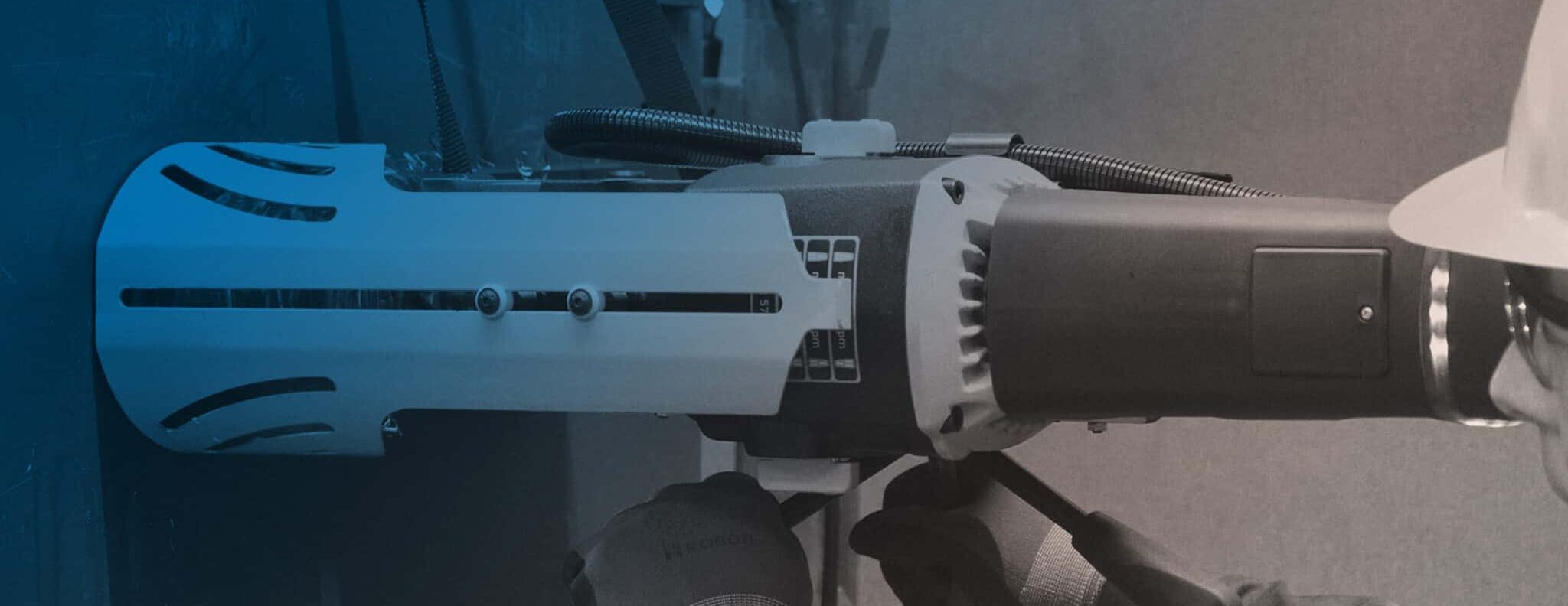
When the same joint repeats at high volume, when manual consistency degrades across a full shift, or when arc-on time is lower than it should be. Steelmax offers welding automation solutions built for structural, plate, and pipe fabrication shops facing exactly those conditions.


Leave A Comment
You must be logged in to post a comment.