
There’s a point in most fabrication shops and large fabrication facilities where the current process just stops scaling.
You can have good welders. You can have solid equipment. But when pipe welding becomes more frequent, more complex, or more critical to delivery timelines, something starts to break down. It usually shows up in the same places; variation in weld quality, too much time spent repositioning parts, operators getting fatigued, and more rework than anyone wants to admit.
That’s not a people problem. It’s a process problem.
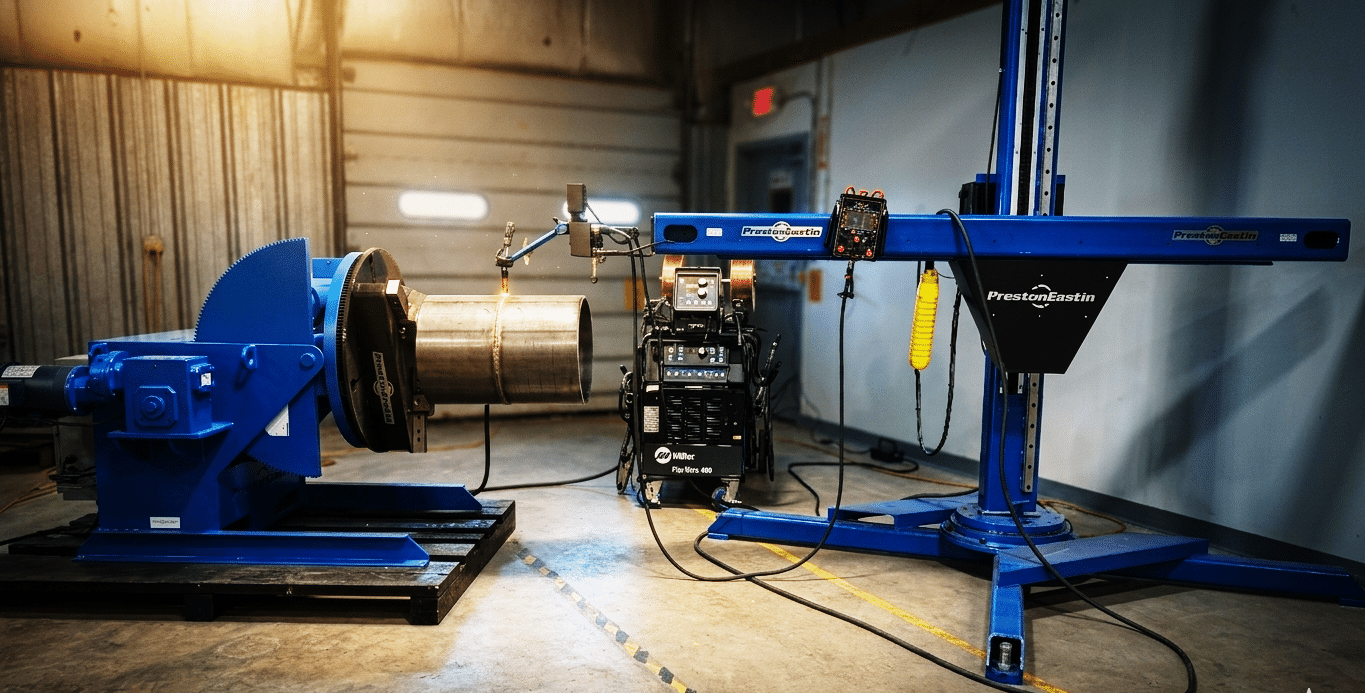
The Integrated Pipe Welding System (IPWS) from Steelmax and Preston Eastin was built with that reality in mind. This seamless integration from two companies in the SMX family of companies is not trying to reinvent welding. It’s solving a much more practical issue how do you make welding more repeatable, efficient, and predictable without adding complexity?
The answer, in this case, is integration.
Instead of piecing together a manipulator from one supplier, a positioner from another, and a welding system from somewhere else and then hoping they work together the IPWS delivers everything as a unified system. Positioning, manipulation, programmable oscillation, and welding power all operate as one coordinated process. That changes more than just convenience. It changes outcomes.
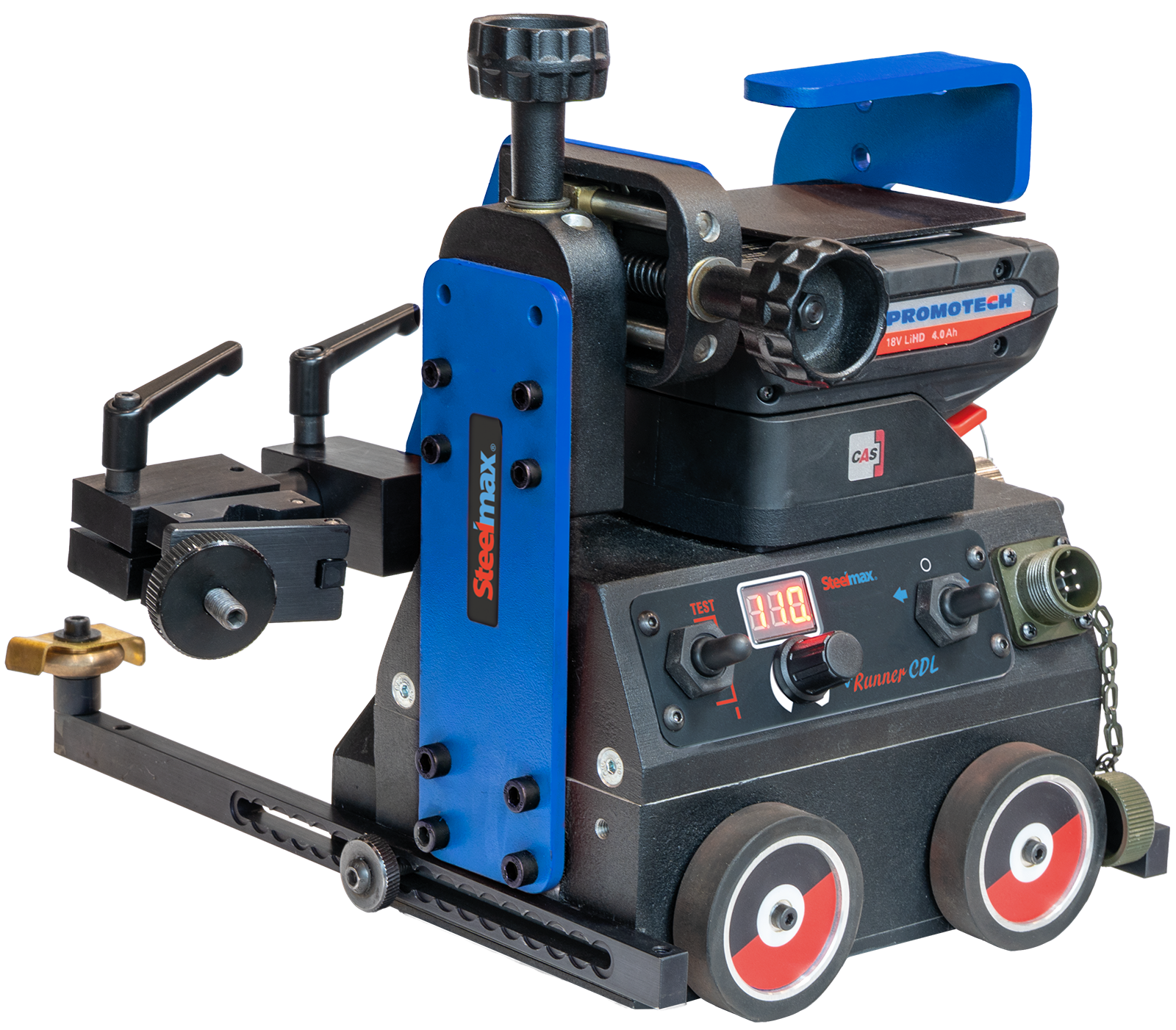
When torch positioning is controlled through a Preston Eastin X-Y manipulator, and part rotation is handled through a PE30 positioner or elevating headstock, you eliminate a major source of inconsistency. When you combine that with the Steelmax Linear Oscillator, you gain precise control over bead shape and fusion, allowing root, hot, fill, and cap passes to be performed with a level of repeatability that manual processes struggle to match.
What that really means on your job is simple: fewer defects, less over-welding, and far less time spent fixing problems after the fact.
There’s also the human side of it, which doesn’t get talked about enough. Welding pipe manually, especially at higher volumes, takes a toll. Fatigue sets in, and with it comes inconsistency. The IPWS reduces that burden by automating positioning and torch movement, allowing operators to focus on control and oversight instead of constant physical adjustment. The result is higher arc-on time and a more sustainable workflow.
And in today’s environment, that matters. Fabricators are being asked to produce more with the same or fewer people. Systems like this aren’t about replacing skill they’re about amplifying it.
From a practical standpoint, the IPWS is built as a turnkey solution. It includes the manipulator, positioning system, Steelmax oscillation technology, and the Miller PipeWorx 400 welding system all delivered together, configured to work together.
That “one system, one delivery” approach removes friction from both procurement and implementation. You’re not coordinating vendors. You’re not troubleshooting compatibility. You’re getting a system that’s already designed to perform as a whole.
Applications span across industries where pipe and vessel welding are critical, data center infrastructure, oil and gas pipe welding, power generation, shipbuilding, and heavy equipment manufacturing. In each case, the requirements are the same: accuracy, repeatability, and productivity on an expanding scale.
The IPWS isn’t positioned as a luxury system. It’s a response to real pressures fabricators are facing right now, labor constraints, tighter timelines, and increasing expectations for weld quality and if you step back and look at it plainly, the value becomes clear.
When you improve positioning, you improve weld consistency.
When you improve consistency, you reduce rework.
When you reduce rework, you lower cost and increase throughput.
That’s not theory. That’s how better systems change real operations. The Integrated Pipe Welding System is simply a more direct way to get there.


 EN
EN  ES
ES 
Leave A Comment
You must be logged in to post a comment.