
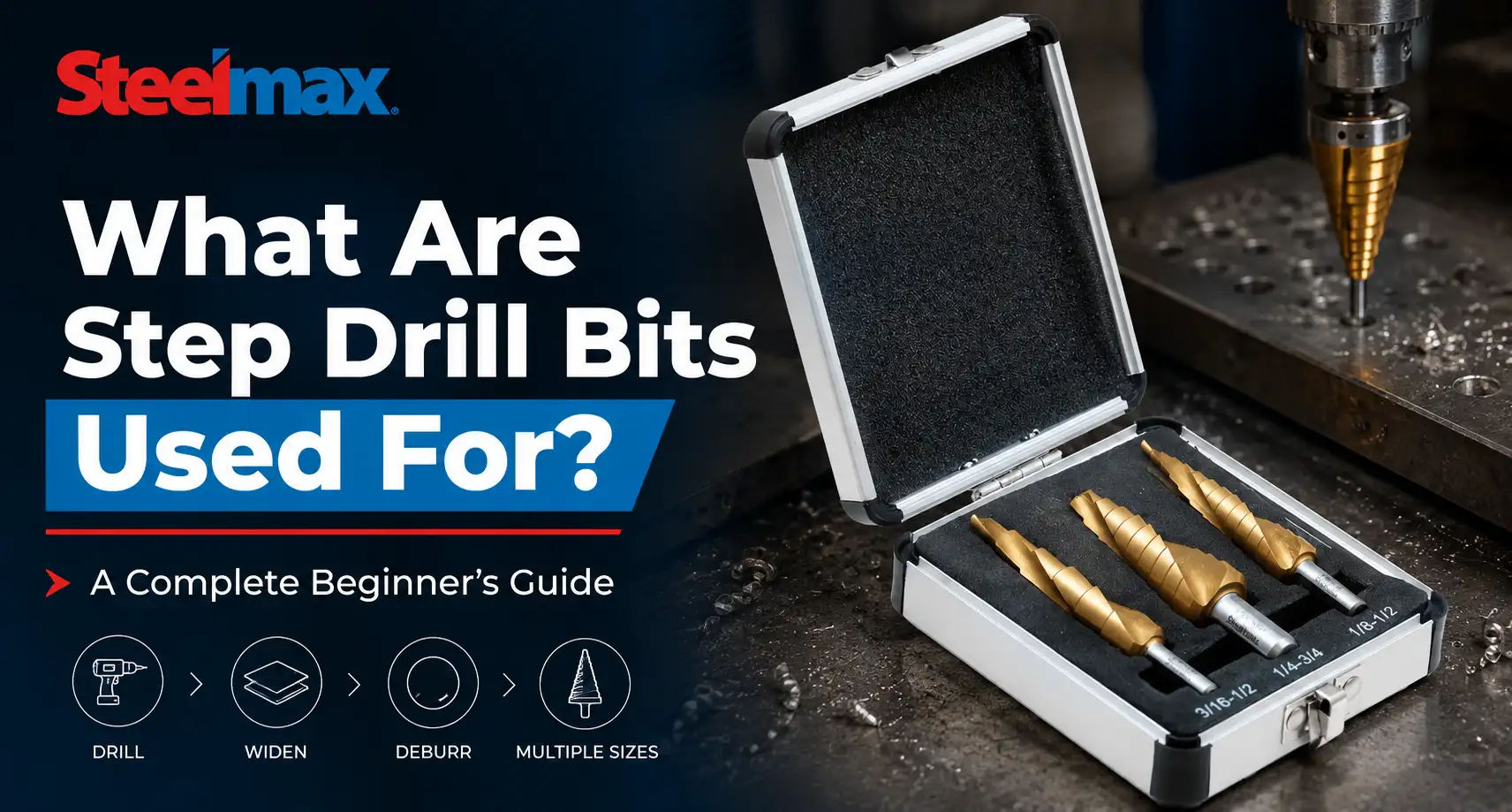

A one-step drill bit can do the job of five or six twist bits. That’s the whole appeal, and it’s why DIYers, maintenance techs, and electricians reach for one before they ever touch a piece of sheet metal or a control panel.
No more swapping bits every time a hole needs to grow. One tool, run through its steps, and you’ve covered a full range of diameters. This guide covers what step drill bits are used for, the materials they’re best at, and where they simply run out of steam.
It also walks through how to run one the right way so you don’t end up with a chewed-up hole or a ruined bit.
What Is a Step Drill Bit?
Picture a cone with a series of steps cut into it, each one a slightly bigger diameter than the last. That’s a step drill bit. Instead of swapping bits as a hole grows, you just keep drilling through the same tool.
Each step is a specific diameter, usually stamped right onto the flute so you can see it while you work. That marking is the whole trick: it lets you stop at the exact size a job calls for without stopping to measure every few seconds.
Because every size lives on one bit, you’re not digging through a drawer of twist bits mid-job. Fewer tool changes, fewer chuck adjustments, and less wasted motion.

If you’re working through a stack of panels or brackets in one sitting, that saved motion adds up fast, and it’s the difference between finishing early and running late.
Stepped Cone Design
The tiered profile does all the work here. As the bit pushes into thin material, each step engages in turn and widens the hole a bit more than the last one.
That’s how one bit ends up carrying six, ten, or sometimes more distinct sizes. Fewer swaps mean less downtime between holes, which matters most in repetitive work like panel drilling or bracket fabrication.
Common Materials and Coatings
You’ll run into step bits in high-speed steel, cobalt, titanium-coated, and black oxide. HSS covers general work at the lowest price point. Cobalt, on the other hand, holds an edge longer in harder alloys and at higher heat.
Titanium coating reduces friction and wear, so the bit lasts longer during repetitive production runs. Black oxide adds a bit of corrosion resistance and helps things run a touch cooler during the cut.
Match the coating to the material, and you will save time and money later. A cobalt step bit chews through stainless steel far longer than an uncoated HSS bit under the same workload.
The price gap between coatings is small. What you get in return, a bit that stays sharp through repeated use, is worth far more than the few extra dollars up front.
What Step Drill Bits Are Used For
Step bits earn their spot in a toolbox by solving one specific problem well: clean, controlled holes across multiple sizes in thin stock. That single strength is more versatile than you might think.
Sheet Metal Holes
Thin sheet metal, enclosure panels, brackets, and ductwork are the most common use cases. A step bit bites cleanly and avoids the aggressive grabbing that can happen with a standard twist bit on thin material.
That matters most when the workpiece isn’t clamped down tight. A twist bit can spin the sheet or tear the edge right as it breaks through.
Electrical Knockouts
Electricians constantly reach for step bits for conduit openings, junction box holes, and cutouts in control panel enclosures. The graduated sizing lets a tech drill to a specific knockout diameter without stocking a dozen separate hole saws.
Consider enlarging a hole in a metal electrical box to fit a conduit fitting. One-step bits resize that cleanly, whereas a twist bit would mean a full bit change halfway through the job.
Enlarging Existing Holes
Step bits widen an existing hole without having to cycle through several standard bits to get there. That’s a real time-saver when a drilled hole comes out just slightly undersized for whatever hardware is going in.
Feed the step bit into the existing hole and let the graduated steps take it up, checking fit as you go instead of guessing at a final size.
Deburring and Chamfering
Many step bits include a chamfered edge on each step, which removes light burrs left by drilling. It’s a handy bonus for smoothing rough edges on sheet metal work.
It won’t replace a dedicated deburring tool for heavier-gauge material or precision work, though. Treat it as a secondary cleanup pass, not the main event.
When to Use a Step Drill Bit Instead of a Regular Bit
Step bits and twist bits solve different problems. The choice between them depends on the material thickness and the level of control you need over the hole size.
Thin Materials
Step bits are built for thin stock, not deep holes. Sheet metal, plastic, fiberglass, acrylic, and thin wood are all realistic applications for a step bit.
Once material gets thick enough that a twist bit’s full flute length is actually doing work, the step bit starts to lose its edge. Deep holes in solid stock still belong to the standard twist bit.
Hole Size Control
The visible steps make it far easier to stop at an exact diameter than eyeballing progress with a twist bit. Many step bits have size markings printed right on the flute or shank for quick reference while you work.
That built-in sizing reference is exactly why step bits show up constantly in electrical and HVAC work, where hole diameter has to match a fitting or knockout size precisely.
How to Use Step Drill Bits Properly
Good results with a step bit depend on a short, repeatable process, not on some special skill you need to master first. Get these basics right, and most fabrication and repair jobs go smoothly.
Mark and Center Punch
Mark the exact hole location before the bit ever touches the material. A center punch creates a small dimple that keeps the bit from wandering off center the moment it starts cutting.
Skip this step, and you’ll likely end up with a hole that’s out of position, especially on thin panels where the bit has less material to bite into for stability.
Drill at the Right Speed
Slower speeds work better on harder metals and larger hole diameters. Push too fast, and you generate heat faster than the material can dissipate it. Cutting fluid on metal reduces heat buildup and considerably extends bit life.
Metal chips and slivers thrown off during drilling aren’t a minor inconvenience. They’re a real hazard. According to the National Institute for Occupational Safety and Health, small particles, such as metal slivers, cause most workplace eye injuries by striking or scraping the eye.
That’s reason enough to treat eye protection as non-negotiable on any drilling task, a point covered in detail in the CDC’s Eye Safety for Workers guidance.
Stop at the Correct Step
Watch the step markings closely as the bit advances, and stop before the hole runs past your target size. Oversizing a hole in thin material is tough to fix after the fact.
Check the fit against the hardware or fitting as you go, rather than waiting until the final step to find out it doesn’t fit.
Limits and Mistakes to Avoid
Step drill bits aren’t the right call for every job, and knowing where they stop being useful saves you both time and bits.
Thick materials, deep holes, masonry, heavy structural drilling, all of that falls outside what a step bit handles well. Push one into a job like that, and either the bit dulls fast, or the hole comes out ragged.
The most common mistakes: drilling too fast, skipping cutting fluid on metal, forcing the bit through material it can’t handle cleanly, and drilling past the intended step. Every one of those shortens a bit’s life and compromises the finished hole.
Bad technique doesn’t just ruin a hole, either. It creates a real injury risk on the shop floor. The Occupational Safety and Health Administration notes in its official guidance that thousands of workers suffer preventable eye injuries every year from flying particles.
Proper technique and the right protective gear both matter on every drilling job, as clearly laid out in OSHA’s Eye and Face Protection overview.
Picking the Right Bit for the Job
Choosing the right bit for the job means matching the tool to the material you’re working with. A step bit earns its spot in thin sheet metal, panels, and electrical work anywhere; clean, controlled holes matter more than raw drilling depth.
Keep one in the kit alongside a standard twist bit set, and most sheet metal and panel jobs get faster without giving up a clean, properly sized hole. Steelmax carries a range of step drill bits built for exactly this kind of precise, repeatable work.
Frequently Asked Questions
A few quick answers to the questions that come up most often around step drill bits.
Can step drill bits be used on wood?
Yes, step drill bits handle thin wood just fine, though they're not the ideal pick for thick or dense lumber. They perform best on sheet materials rather than solid wood stock of any real thickness.
Are step drill bits only for metal?
No, step drill bits also handle plastic, fiberglass, acrylic, and thin wood right alongside sheet metal. What is a step drill bit used for outside of metalwork? Usually thin, non-structural materials of one kind or another.
Why does a step drill bit overheat?
A step bit overheats due to excessive speed, dull cutting edges, or lack of cutting fluid on metal. Heat builds up fastest when the bit runs too fast for the material or lingers too long at a single step.
Can a step drill bit make a hole bigger?
Yes. A step drill bit increases the size of an existing hole by feeding it through a series of graduated steps until it reaches the desired diameter. That makes it a practical fix for undersized holes without needing to reach for several separate bits.


Laisser un commentaire
Vous devez être connecté pour poster un commentaire.